
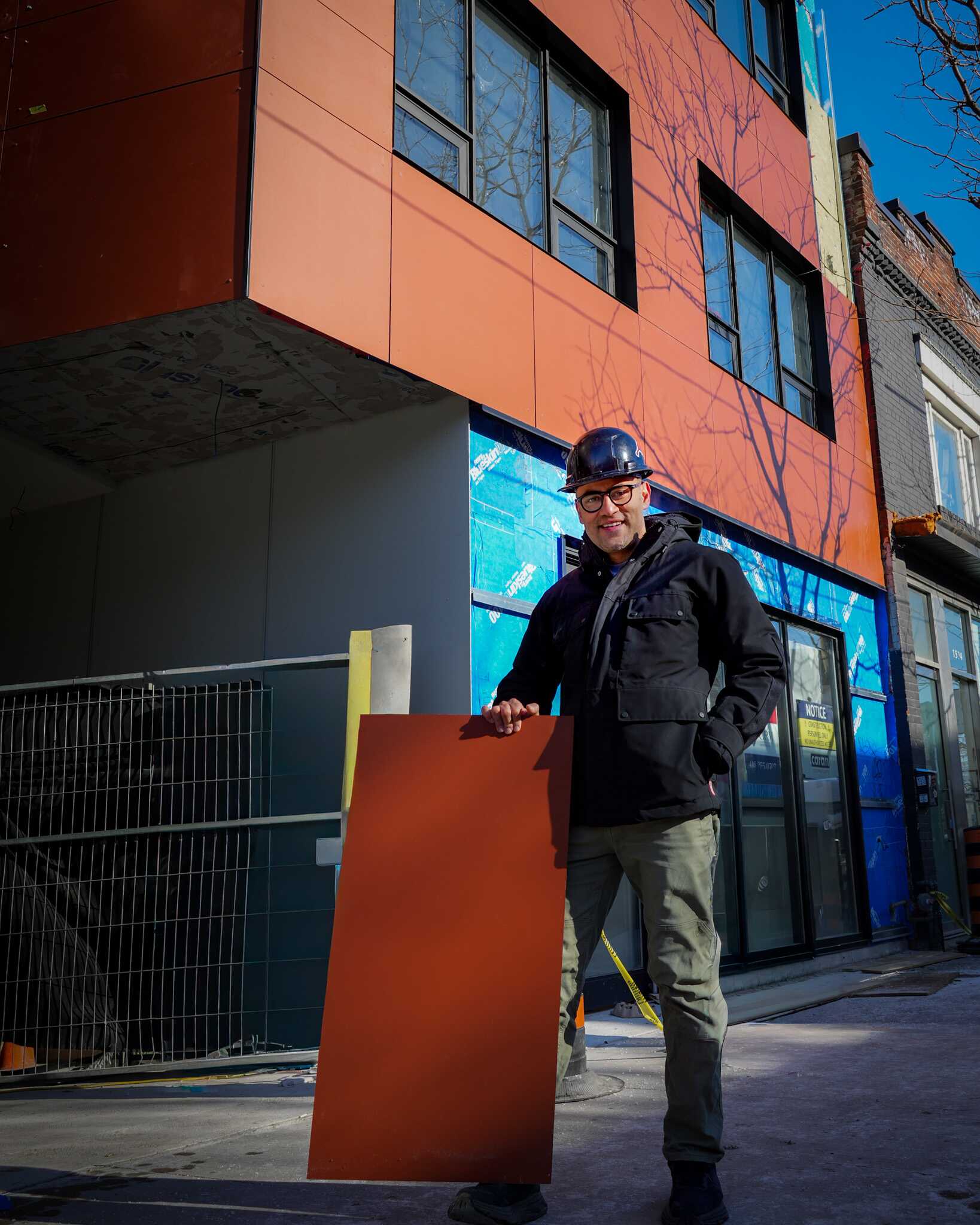

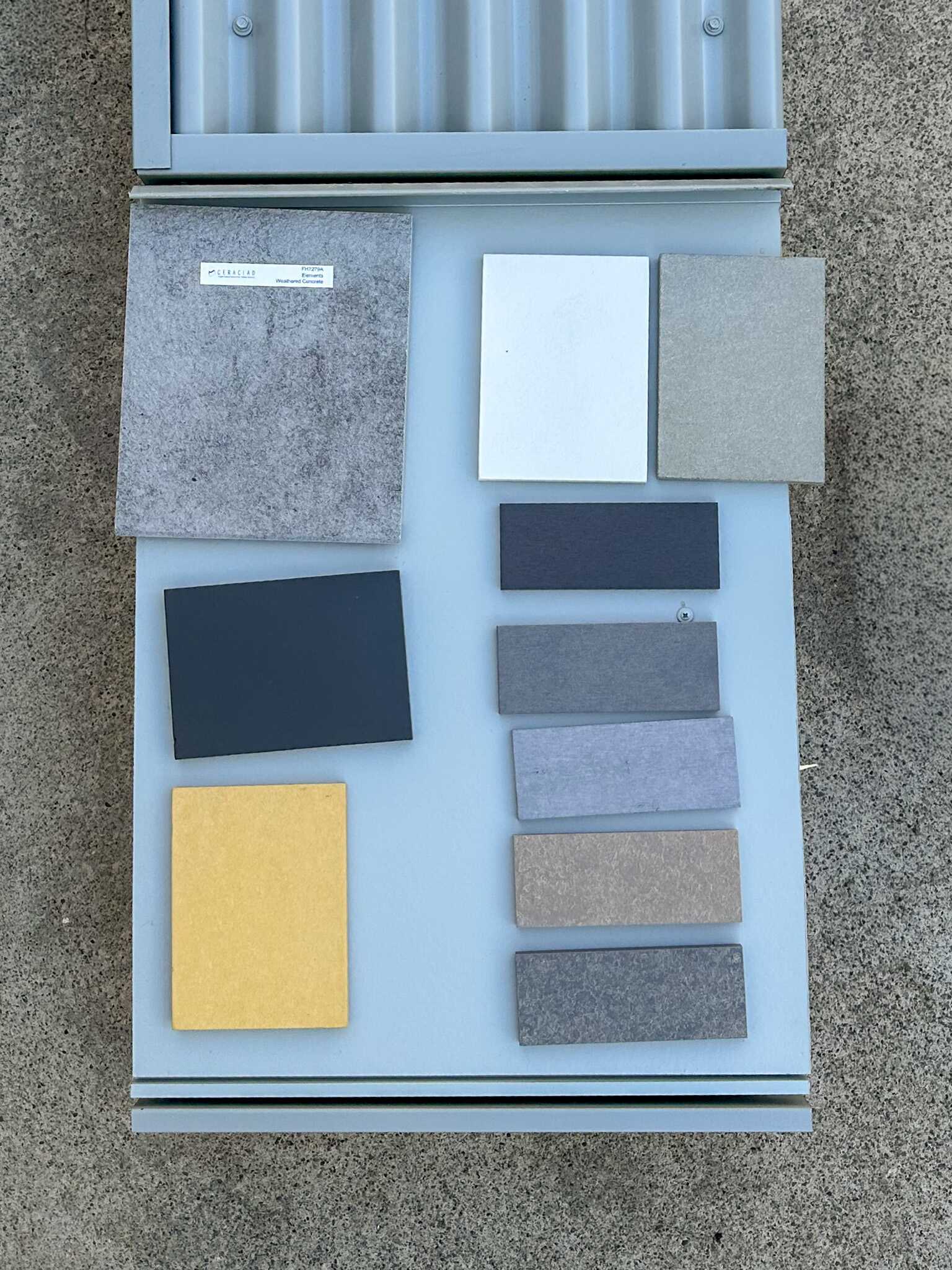
Most frequent questions and answers
What is fiber cement cladding made of?
Fiber cement cladding is manufactured from a blend of Portland cement, mineral fillers, cellulose fibers, and water. This composition creates a rigid, dimensionally stable board that offers excellent durability, fire resistance, and weather performance for exterior applications.
Is fiber cement cladding non-combustible?
Yes. Most fiber cement panels and siding products are classified as non-combustible when installed as part of an approved wall assembly. This makes fiber cement a preferred choice for mid-rise, commercial, and multi-residential buildings where fire safety is a critical requirement. Always consult project-specific code and manufacturer documentation.
Is fiber cement suitable for Toronto and Ontario’s climate?
Absolutely. Fiber cement performs exceptionally well in Canadian freeze–thaw conditions. It resists moisture absorption, swelling, warping, rot, and UV degradation, making it well suited for Toronto, the GTA, and broader Ontario weather conditions.
How long does fiber cement cladding last?
When properly detailed and installed, fiber cement cladding can last 30 to 50 years or more. Many manufacturers provide long-term material and finish warranties, depending on the product line and coating system.
Does fiber cement cladding require a lot of maintenance?
No. Fiber cement is considered a low-maintenance cladding material. Periodic cleaning and basic inspections are typically sufficient. Factory-finished and through-coloured panels significantly reduce the need for repainting or surface treatment over time.
What is the difference between fiber cement panels and fiber cement siding (planks)?
Fiber Cement Panels are large-format boards commonly used in modern, architectural rainscreen façades with clean lines and open or closed joints.
Fiber Cement Siding (Planks) consists of smaller horizontal boards that create a more traditional siding appearance, commonly used in residential applications.
Both options offer the same core material benefits but differ in aesthetics and installation style.
Is fiber cement more expensive than other siding materials?
Fiber cement typically costs more than vinyl siding but is often more economical than metal plate, natural stone, or high-end composite systems. Its long lifespan, low maintenance, and durability make it a cost-effective solution over the life of the building.
Can fiber cement be used in a rainscreen system?
Yes. Fiber cement panels are commonly installed as part of a ventilated rainscreen façade, which improves moisture management, increases energy performance, and extends the life of the building envelope. This is the recommended installation method for most commercial and multi-residential projects.
What design options are available with fiber cement cladding?
Fiber cement offers extensive design flexibility, including:
Smooth, textured, grooved, or stone-like finishes
Through-coloured architectural panels
Wood-look and industrial aesthetics
Large-format panels or traditional planks
Open-joint or closed-joint façade systems
This makes it suitable for both contemporary and traditional designs.
Is fiber cement environmentally friendly?
Fiber cement is considered a sustainable cladding option due to its long service life, durability, and low replacement frequency. Many manufacturers incorporate recycled content and produce finishes that reduce long-term environmental impact.
Does fiber cement require special installation?
Yes. Fiber cement must be installed according to manufacturer guidelines, including proper fastening, cutting, joint detailing, and dust control during fabrication. Professional installation is essential to ensure performance, longevity, and warranty compliance.
Do you supply and install fiber cement cladding?
Yes. CLADDERS™ provides a complete Design–Supply–Install service for fiber cement cladding across Toronto, the GTA, and Ontario. We work with all major fiber cement manufacturers and tailor each system to the project’s budget, performance requirements, and architectural intent.
Which fiber cement brands do you work with?
We work with leading global manufacturers including James Hardie, Allura, Nichiha, Ceraclad, Equitone, Swisspearl, Cembrit, and Cemfort, allowing us to recommend the best product for each specific project.
How do I know if fiber cement is the right choice for my project?
The best way to determine suitability is through a material consultation. Factors such as building type, budget, fire rating, aesthetic goals, and installation conditions all play a role. Our team can compare fiber cement against other cladding options and provide a clear recommendation.

Reviews
There are no reviews yet.