
Metal Siding in Canada — Durable, Non-Combustible Metal Cladding Systems
Product Overview:
Metal siding—also commonly referred to as metal cladding—is one of the most durable, fire-safe, and low-maintenance exterior systems used in residential and commercial construction across Canada.
Designed to withstand harsh winters, moisture, and temperature fluctuations, modern metal siding provides a non-combustible, long-lasting solution with a clean, architectural appearance.
At Cladders, we are a leading supplier and contractor of metal siding systems in Toronto and Southern Ontario. We offer a wide range of profiles—including corrugated panels, tongue and groove systems, and standing seam siding—combined with professional installation services for residential, commercial, and industrial projects.
Our team delivers tailored solutions that balance durability, performance, and design—helping you achieve a high-quality exterior built to last.
Quick Links:


METAL CLADDING
Metal Siding Profiles
There are 3 types of common steel metal siding solutions in the North American market. We categorize them based on the shape and the size of the profiles and their fastening systems. Some of the profiles come with bot concealed OR exposed fasteners. These 3 main categories are 1) Metal Panels, 2) Corrugated Steel Panels and, 3) Standing Seam Metal Roof/Cladding.
1. T&G Metal Siding Panels
Metal siding panels are manufactured through a 3 step process. The first is the shop drawing. Here the designer defines the length, width, and depth of each panel. Then the production line cut the proper pattern, based on the design, out of prefinished metal coils on the first station. Ob the next station, the operators will bend the panels into their final form. These types of metal panels have a smooth surface and straight edge to form a flat panel system. Metal Panels can be used for commercial, agricultural, AND modern residential projects. In addition, this type of building material offers ease of installation, good insulation, durability, and weather resistance. It is also available in printed wood finishes as a more durable solution than regular wood siding.
This type of metal siding is mainly used for industrial buildings, agricultural buildings and commercial projects. Corrugated metal panels are manufactured from steel sheets through a roll forming process to form a continuous corrugated profile. In CLADDERS we have over 10 different profiles. The advantage of this type of panel is that, unlike ACM Panel, it offers a continuous look and weather protection properties while it is considered to be the cheapest metal cladding solution. In addition to that, it adds amazing shadow details in different hours of a day! If you are looking for a metal siding that is both durable and weather-resistant, corrugated metal might be the right choice for you!
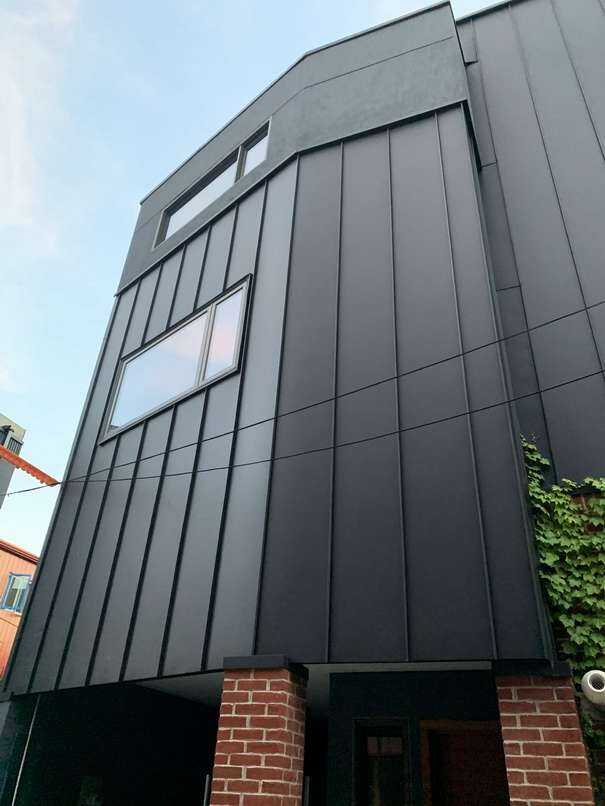
Standing seam metal siding is a type of exterior cladding that typically consists of steel or aluminum and forms permanent waterproof seams as it runs vertically up the side of a building. It has been popular in the U.S. since before WWII and remains common today both on new construction and as a replacement for older sidings such as wood shake and shingles. Standing seam metal siding is available in a wide range of colors, including earth tones, bright primaries and metallic finishes. Panels can be flat or textured depending on the manufacturer and most brands offer a variety of panel profiles so you can choose one that matches your home’s architecture.
METAL SIDING
Best Metal Cladding Solutions in Canada
Metal Siding, also known as Metal Cladding, is One of the most popular and economical exterior solutions that has been around for years. This solution is mainly manufactured from sheets of metal coils. This process includes cutting, bending, OR roll-form the Aluminum OR Steel coils. Metal siding products are available in a variety of sizes, lengths, and finishes. The thickness of the metal sheets also referred to as gauge, is also an important quality factor in the durability and smoothness of the panel surfaces.
Architectural Metal Cladding Systems
Metal cladding—once primarily used in industrial construction—has evolved significantly. With advancements in manufacturing technologies, coating systems, and installation methods, metal siding is now widely used in high-end residential and commercial projects. Today’s systems offer exceptional versatility, allowing architects and developers to achieve clean, contemporary façades with long-term durability.
Why Metal Siding is a Smart Choice
- Durability: Resistant to harsh weather, corrosion, and thermal movement
- Low Maintenance: Reduced long-term maintenance and lifecycle costs
- Design Flexibility: Wide range of colors, finishes, and panel profiles
- Sustainability: Recyclable material with strong lifecycle performance
If you are planning a new build or a building refurbishment project, choosing the right cladding system is critical to both performance and design. At Cladders™, we provide modern metal siding and cladding solutions in Toronto and across Southern Ontario that are reliable, cost-effective, and architecturally refined.
SIDING REPAIR
Metal Siding Repair, Restore & Re-clad in Toronto, Ontario
Over time, even the most durable metal siding systems begin to show signs of wear—whether from weather exposure, improper installation, or aging materials. At Cladders™, we specialize in metal siding repair and full cladding refurbishment services across Toronto and Southern Ontario, helping property owners extend the life of their buildings while upgrading performance and appearance.
Our Metal Siding Repair Services
We provide targeted and cost-effective repair solutions, including:
- Panel replacement and matching
- Substructure correction and re-alignment
- Sealant replacement and waterproofing upgrades
- Fastener replacement and reinforcement
- Flashing repairs and transition detailing
- Investigation and remediation of air/water leaks
In many cases, repair alone is not enough—especially for older buildings or poorly installed systems. We offer full or partial building refurbishment, including recladding solutions that modernize your building envelope while improving energy performance and durability.
Our team evaluates both aesthetic damage and underlying building envelope performance, ensuring that repairs address the root cause—not just the visible issue. All repair work is completed in compliance with Ontario Building Code (OBC) requirements and industry best practices.
FINISHES
Metal Siding Coatings, Finishes & Protective Systems
The long-term performance of a metal siding system depends on much more than the visible color or profile. Every architectural metal panel is manufactured using multiple protective layers that work together to provide corrosion resistance, color stability, durability, and weather protection.
At CLADDERS™, we carefully select products from trusted manufacturers such as Agway and Vicwest and help clients choose the appropriate substrate and finish system based on the building type, location, performance requirements, and budget.
How Metal Siding Is Protected
Modern architectural metal siding is manufactured using a multi-layer coating system:
Steel Core → Metallic Protective Coating → Chemical Pretreatment → Primer → Architectural Finish Coat

Each layer plays an important role:
- The steel core provides structural strength.
- The metallic coating protects against corrosion.
- The pretreatment and primer improve paint adhesion.
- The finish coat provides color, UV protection, and long-term weather resistance.
This layered approach allows high-quality metal cladding systems to maintain their appearance and performance for decades.
Metallic Coating Systems
G90 (Z275) Galvanized Steel
Galvanized steel is coated with zinc to help protect the steel substrate from corrosion. It is a reliable and cost-effective option commonly used in residential, commercial, and industrial applications. Benefits include:
- Excellent value
- Proven performance
- Good corrosion resistance
- Wide availability
AZ50 / AZM150 Galvalume®
Galvalume® steel combines aluminum and zinc to provide enhanced corrosion resistance compared to conventional galvanized steel. Benefits include:
- Long-term corrosion protection
- Improved edge protection
- Excellent durability
- Preferred for many architectural applications
Galvanneal
Galvanneal is a specialized zinc-iron coated steel primarily used where enhanced paint adhesion or fabrication characteristics are required. It is less common in exposed architectural cladding applications.
Architectural Finish Systems
PVDF (Kynar 500®) Finishes
PVDF coatings, commonly known by the Kynar 500® trade name, are considered the industry benchmark for premium architectural metal cladding.
Benefits include:
- Exceptional color retention
- Superior UV resistance
- Excellent fade resistance
- Reduced chalking
- Long-term aesthetic performance
PVDF finishes are frequently specified for commercial, institutional, multi-residential, and architecturally significant projects where appearance and durability are critical.
SMP (Silicone Modified Polyester) Finishes
SMP coatings provide a durable and economical finish solution for many building types.
Benefits include:
- Cost-effective performance
- Good weather resistance
- Broad color selection
- Reliable long-term protection
SMP systems are commonly used on commercial, industrial, agricultural, and residential projects where budget considerations are a primary factor.
Woodgrain Finishes
Woodgrain metal siding combines the appearance of natural wood with the durability and low-maintenance benefits of metal.
Benefits include:
- No rot or insect damage
- No painting or staining
- Consistent appearance
- Long-term durability
Woodgrain systems are popular for feature walls, soffits, accents, and contemporary residential and commercial projects.
Metallic Finishes
Metallic coatings incorporate specialized pigments to create sophisticated architectural appearances such as silver, titanium, zinc, champagne, and other contemporary metal-inspired finishes.
These finishes are often selected for modern commercial buildings, institutional projects, and high-end architectural applications.
SMP (Silicone Modified Polyester) Finishes
Different projects require different performance levels.
| Performance Level | Typical Substrate | Typical Finish |
|---|---|---|
| Budget-Conscious | G90 Galvanized | SMP |
| Commercial Standard | Galvalume® AZ50/AZM150 | SMP |
| Premium Architectural | Galvalume® AZ50/AZM150 | PVDF (Kynar 500®) |
| Signature Architectural Projects | Galvalume®, Aluminum, or Specialty Metals | Premium PVDF or Specialty Coatings |
Our team can help evaluate the appropriate system based on environmental exposure, aesthetic goals, lifecycle expectations, and project budget.
FAQs
Frequently Asked Questions
What is metal siding?
The term ‘metal siding’ can be used to describe any metal product that is applied to the outside of a building as an exterior cladding. While there are many types of metal products, all function in very similar ways. Metal siding products share many common features, each with unique properties and applications. Finishing touches such as color and texture change a flat aluminum surface to a finished look making it attractive and stylish option for your home or office building.
Aluminum Siding – Aluminum is known for its durability, strength and resistance to corrosion making it ideal for contact with the earth’s atmosphere. A finish coat of paint makes aluminum siding resistant to dirt, oil, gas and most chemicals whether acidic or alkaline in nature. Aluminum siding has some flexibility and can bend slightly, making it the most versatile of all types of metal siding.
Stainless Steel Siding – Stainless steel is highly resistant to corrosive elements even in high moisture environments. The only threat would be direct contact with high-grade acids over a period of time which could result in pitting if left untreated. Specialty coatings are available for stainless steel siding products to help prevent staining and corrosion.
Galvanized Steel Siding – Galvanized steel was originally used as an electrical conductor, but is now commonly used on homes as exterior cladding due to its strength, durability and affordability. A thin layer of zinc is applied during manufacturing providing a durable rust resistant coating for this type of metal siding. Galvanized steel is also available with a powder – coated finish which provides additional resistance to corrosion and scratching.
Why is metal siding good?
Aluminum is a durable material that resists damage from weather, moisture and pests. Because aluminum is well insulated it reduces heating and cooling costs (aluminum conducts heat at about one-third the rate of other common siding materials). It won’t rot or rust; requires less maintenance than vinyl; and won’t peel or blister because moisture can’t penetrate its surface. Its smooth surfaces resist dirt buildup, making them easy to clean. Aluminum sidings come in a wide range of colors and styles allowing you an almost endless choice in decorating your home’s exterior appearance.
What are the different types of metal siding?
Metal siding on the market today is flexible, lightweight and easy to handle. It comes in two basic styles: vertical panels that are usually sold flat (flush with the surface on which they’re installed) or corrugated (with ridges like an accordion). Panels of either style can be easily cut around windows, doors and other openings. Vertical siding can also be custom-formed to wrap around corners or along rooflines. Corrugated metal siding is available in aluminum, steel or vinyl-coated polyester; it’s often used for privacy fencing around decks and patios.
Metal siding is available from a wide range of manufacturers in different grades, from basic models to luxury products with options such as brick patterning, natural wood grain and simulated stone or even real brick. Installers can match colors to virtually any home décor.
When considering metal siding options, you should also be aware of the latest technology – vinyl siding. Vinyl is available in a wider selection of styles and colors than ever before, and it’s easier than ever to maintain and install. If you’re looking for something more traditional there’s always wood clapboard siding too!
How much does metal cladding cost?
Metal cladding can be a great way to protect your home or business from the elements. It is also an efficient way to insulate your property. However, metal cladding can be expensive. The cost of metal cladding will vary depending on the type of metal you choose, the size of the area you need to cover, and the installation costs.
The average cost of metal cladding can range from $8 to $15 per square foot. For example, if you need to clad a 20×20-foot area, the total cost would be between $3,200 and $6,000. Metal cladding is an investment, so it’s important to factor in the long-term costs when deciding if it’s the right choice for your home or business.
There are several factors that will affect the cost of metal cladding. The type of metal you choose will be the biggest factor. aluminum cladding is the most popular type of metal cladding and usually the most affordable. Stainless steel cladding is another popular option, but it is more expensive than aluminum. Copper and zinc are also options for metal cladding, but they are even more expensive than stainless steel.
The size of the area you need to clad will also affect the cost. Larger areas will obviously cost more to clad than smaller ones. The complexity of the installation can also affect the price. If you need to install metal cladding on an irregularly shaped area, it will likely cost more than if you were covering a simple rectangular area.
Finally, the installation costs will also affect the total price of the project. If you hire a professional to install the metal cladding, it will obviously cost more than if you do it yourself. However, hiring a professional can save you time and ensure that the job is done correctly.
Overall, the cost of metal cladding can vary widely depending on the factors mentioned above. However, it is generally an affordable option for many homeowners and businesses. It is important to compare prices and get multiple quotes before making a final decision.
What is the cheapest metal cladding?
The cheapest metal cladding is typically roll formed galvanized steel. Corrugated Panels are generally the cheapest type of metal siding offered by CLADDERS. Aluminum siding is generally in the middle range. However, copper and zinc are also options for metal cladding, but they are even more expensive than Steel siding and Aluminum siding.
What are the Advantages of Metal Cladding (Metal Siding)?
Some advantages of metal cladding include the fact that it is durable, low maintenance, and can increase the value of your property. It is also an efficient way to insulate your property.
What are the Disadvantages of Metal Cladding (Metal Siding)?
Metal cladding can be expensive. The cost of metal cladding will vary depending on the type of metal you choose, the size of the area you need to cover, and the installation costs. There are also some disadvantages to metal cladding. It can be noisy in rainstorms and when hit by hail. It can also dent easily. Finally, it is not as fire resistant as other types of cladding.
When Should You Consider Metal Siding Repair?
If your building envelope is showing any of the following issues, it may be time for a professional assessment:
- Oil canning, dented, or warped panels
- Water infiltration or failed sealants
- Loose, rattling, or improperly fastened panels
- Rust, corrosion, or coating failure
- Thermal movement issues or panel misalignment
- Outdated systems that no longer meet current building standards
Can existing metal siding be repaired instead of replaced?
Yes. In many cases, metal siding can be repaired by replacing damaged panels, fixing substructures, or upgrading sealants and flashings. However, if the system is aging or improperly installed, a more comprehensive solution may be recommended.
When should I consider recladding instead of repairing metal siding?
Recladding is recommended when:
- The siding system has widespread damage or failure
- There are ongoing water infiltration or insulation issues
- The building’s exterior is outdated or underperforming
- You want to upgrade the appearance and value of the property
In these situations, recladding provides a more durable and long-term solution than repeated repairs.
What is included in a metal siding refurbishment or recladding project?
A typical refurbishment or recladding scope may include:
- Removal of existing siding or cladding systems
- Installation of new metal siding or modern façade systems
- Upgrading insulation and air/vapour barriers
- Integration with windows, doors, and curtain wall systems
- Design-assist to improve aesthetics and constructability
Each project is customized based on your building’s condition and goals.
Can metal siding upgrades improve energy efficiency?
Yes. Upgrading your metal siding system—especially during recladding—can significantly improve thermal performance and airtightness. This helps reduce energy loss, improve indoor comfort, and lower operating costs.
What types of buildings are suitable for metal siding refurbishment?
Metal siding repair and refurbishment are ideal for:
- Commercial buildings and retail plazas
- Industrial and warehouse facilities
- Multi-unit residential and mixed-use developments
These upgrades are often used to extend building lifespan, improve performance, and enhance curb appeal.
Will metal siding repair or recladding disrupt building operations?
Our team can plan phased installation strategies to minimize disruption. We work closely with property managers and contractors to maintain safe access and keep your building operational during the process.
How do I know if my building needs repair or full recladding?
We recommend starting with a professional site assessment. Our team will evaluate your existing siding system and provide a clear recommendation based on cost, performance, and long-term value.
Do you offer design support for upgrading metal siding?
Yes. We provide design-assist services to help you select materials, refine details, and ensure your new façade meets both aesthetic and technical performance goals.
What is the difference between Galvanized Steel and Galvalume®?
Both provide corrosion protection, but Galvalume® typically offers superior long-term corrosion resistance due to its aluminum-zinc coating composition. For many architectural applications, Galvalume® is considered the premium substrate option.
What is the difference between PVDF (Kynar 500®) and SMP finishes?
PVDF coatings offer superior color retention, UV resistance, and long-term appearance compared to SMP coatings. SMP remains an excellent and economical finish choice for many commercial and industrial applications.
Will metal siding fade over time?
All exterior materials weather naturally. Premium PVDF finishes are specifically engineered to minimize fading, chalking, and gloss loss, helping maintain the building’s appearance for many years.
Is thicker metal siding better?
Heavier gauge panels generally provide greater rigidity, improved dent resistance, and enhanced durability. The appropriate gauge depends on the project’s structural and performance requirements.
Why do similar metal siding products have different prices?
Pricing differences are often influenced by steel thickness, substrate type, finish system, warranty coverage, manufacturing quality, and installation requirements. Products that appear similar can perform very differently over their lifespan.
Which finish is best for commercial and institutional buildings?
For projects where long-term aesthetics and durability are priorities, architects commonly specify Galvalume® substrates with PVDF (Kynar 500®) finishes due to their proven performance and low maintenance requirements.
Contact Today!
Contact Cladders™ for Expert Siding Services in Toronto
Service Request
Start your project with confidence—contact Cladders™ for expert guidance, accurate pricing, and reliable installation.
Technical Details:
| Available Profiles | Corrugated (7/8”), Standing Seam, Ribbed Panels (3-150, 4-150, 6-150, 7-150), Box Rib (2-300, 3-300, 4-300), Architectural Profiles (Stratus, Century Rib, Diamond Rib, Optimum Rib, Lo-Rib, etc.) |
|---|---|
| Panel Coverage | Typically 24” to 36” coverage depending on profile |
| Available Gauges | 26 ga, 24 ga, 22 ga, 20 ga (select profiles available in heavier gauges) |
| Material Types | Galvanized Steel, Galvalume®, Aluminum, Weathering Steel (Corten) |
| Steel Standards | Conforms to ASTM A653 / A792 (Grade 33 to Grade 80 steel) |
| Coating Types | G90 (Z275), AZ50/AZM150, Galvalume®, Galvanneal |
| Finish Systems | Pre-painted (Kynar 500 / PVDF), SMP coatings, Metallic finishes, Woodgrain finishes |
| Color Range | 30+ standard architectural colors including Black, Charcoal, Bright White, Slate Grey, Bronze, Red, Blue, Green, Metallic Silver, Copper, and custom finishes |
| Special Finishes | Matte finishes, metallic coatings, woodgrain prints, interior liner panels |
| Sustainability | Fully recyclable material with long lifecycle performance |
| Durability | Resistant to harsh weather, UV exposure, and corrosion |
| Wind Resistance | Engineered to meet NBCC wind load requirements (project-specific design required) |
| Structural Performance | Load tables available based on span, gauge, and profile |
| Deflection Limits | Typically designed to L/180 or L/240 depending on application |
| Fire Performance | Non-combustible material (dependent on assembly) |
| Thermal Movement | Designed with allowance for expansion and contraction |
| Air & Water Performance | Integrated with air/vapour barrier systems for full envelope performance |
| Substructure | Steel girts, Z-bars, or clip systems depending on design |
| Fastening Systems | Exposed fastener or concealed clip systems |
| Integration | Compatible with all types of curtain walls & glazing systems, panelized systems, doors, and windows |
| Customization | Custom lengths, profiles, perforations, and finishes available |
| Applications | Commercial, industrial, institutional, and high-end residential projects |
Related products
-
 Modern Rainscreen Cladding Systems
Exterior Wall Assembly Systems: Weather Barriers, Cladding Support Systems & Insulation
- Modern Rainscreen Cladding Systems
Honeycomb Cladding Toronto – Lightweight Stone Cladding
- Metal Cladding
Corrugated Metal Wall Panels
- Modern Rainscreen Cladding Systems
Precast Concrete Wall Panels
1 review for Metal Siding in Canada — Durable, Non-Combustible Metal Cladding Systems
C L A D D E R S –
Hello everyone,
Here you can write reviews and comments for our Metal Cladding & Steel Siding products and our installation services. Positive reviews from awesome clients like you would help our new customers to feel confident about working with us as their trusted siding contractor in Canada. Thank you for taking the time to provide your highly appreciated feedback.
Kind Regards
C L A D D E R S